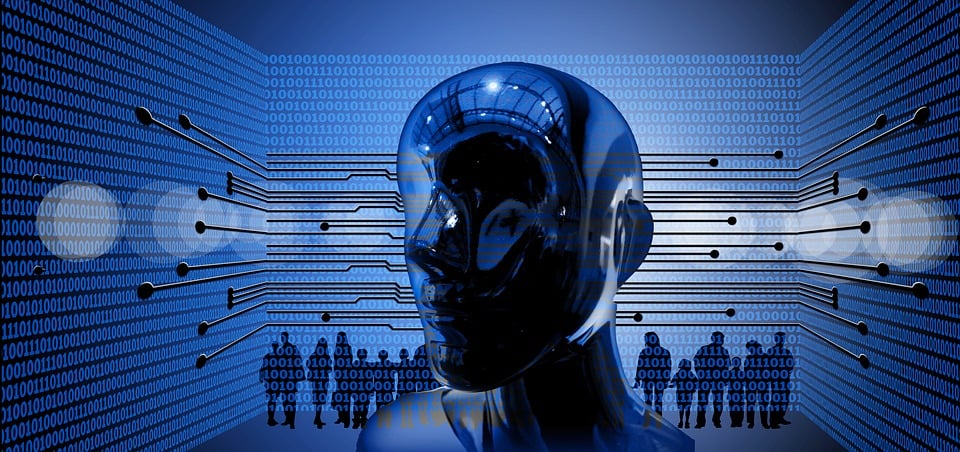
The fusion of quantum computing and artificial intelligence represents the most significant leap in computational history, moving far beyond the linear constraints of classical binary systems. We are currently transitioning from an era of “narrow AI” to a landscape where quantum-enhanced neural networks can solve multi-variable optimization problems in seconds. This evolution is not merely about raw processing speed; it is about the fundamental ability to process vast, high-dimensional datasets with near-perfect accuracy. For the modern enterprise, the integration of these technologies is no longer a distant theoretical exercise but a strategic necessity to maintain market dominance.
Organizations that fail to grasp the mechanics of quantum-classical hybrid systems risk total obsolescence as their competitors unlock unprecedented levels of predictive intelligence. Navigating this frontier requires a deep understanding of qubit stability, algorithmic efficiency, and the ethical implications of super-intelligent autonomous agents. This guide serves as a comprehensive blueprint for leaders ready to architect the next generation of digital infrastructure. By deconstructing the core components of the quantum AI stack, we provide the tools necessary to command your technological destiny in a post-classical world.
The Technical Foundation of Quantum Intelligence

Building a future-ready intelligence system requires a foundation that leverages the principles of subatomic physics to process information.
A. Qubit Optimization and Decoherence Control
The stability of quantum bits, or qubits, is the primary hurdle in modern computing today. Advanced error-correction protocols are now being integrated into AI training loops to ensure that quantum noise does not degrade the integrity of the output.
B. Hybrid Quantum-Classical Algorithms
Most enterprise applications currently rely on hybrid models where a classical computer handles data pre-processing. The quantum processor then manages the complex optimization tasks that would overwhelm standard silicon chips.
C. Variational Quantum Classifiers
These specialized algorithms are designed to identify patterns in high-dimensional data that are invisible to classical machine learning. By mapping data points into a quantum Hilbert space, enterprises can achieve a level of classification accuracy that was previously impossible.
Transforming Enterprise Strategy with Synthetic Power
The application of future computing power allows for a level of strategic precision that redefines the concept of market intelligence.
A. Real-Time Global Supply Chain Optimization
Quantum AI can simulate millions of logistical variables simultaneously, from weather patterns to geopolitical shifts. This allows for the creation of “self-healing” supply chains that can pivot instantly to avoid disruption.
B. Generative Molecular Design for Bio-Pharma
The ability of quantum systems to simulate atomic interactions at scale is revolutionizing the world of drug discovery. AI models can now “design” new molecules with specific properties, reducing the time from lab to market by several years.
C. Hyper-Personalized Financial Risk Modeling
Traditional risk assessments are often reactive and based solely on historical data. Quantum-enhanced AI allows for the creation of predictive simulations that account for “black swan” events, providing unparalleled security.
Navigating the Quantum Cybersecurity Landscape
As computational power grows exponentially, the frameworks designed to protect and govern that power must evolve at the same rate.
A. Post-Quantum Cryptography (PQC) Implementation
Quantum computers pose a direct threat to current encryption standards like RSA and ECC. Organizations must aggressively transition to lattice-based and other PQC algorithms to ensure their data remains secure.
B. Algorithmic Transparency and Explainability
As AI models become more complex, the “black box” problem becomes significantly more dangerous. Implementing rigorous explainability frameworks ensures that human oversight remains a central component of autonomous decision-making.
C. Mitigating Bias in Large-Scale Synthetic Models
Quantum systems can inadvertently amplify the biases present in training data if they are not properly audited. Future-ready enterprises must establish independent ethical review boards to monitor the “moral compass” of their computational agents.
Operationalizing Quantum AI in Business
Moving from theory to practice requires a phased approach that minimizes risk while maximizing innovative output.
A. Developing a Quantum-Ready Workforce
The talent gap is one of the biggest challenges for enterprises looking to scale quantum technologies. Companies must invest in training their existing data scientists in quantum mechanics and linear algebra.
B. Selecting the Right Quantum Cloud Provider
Building a physical quantum computer is too expensive for most firms. Accessing quantum processing power via the cloud allows for experimentation without the massive upfront capital expenditure.
C. Prioritizing High-Impact Use Cases
Don’t try to move every process to quantum computing at once. Start with the most computationally expensive problems, such as portfolio optimization or chemical simulation, where quantum offers the clearest advantage.
The Role of Superposition in Data Processing
One of the most mind-bending aspects of this technology is how it changes our relationship with data itself.
A. Parallelism Beyond Classical Limits
In a classical system, a bit is either a one or a zero. In a quantum system, a qubit can exist in both states simultaneously through superposition, allowing for massive parallel processing.
B. Entanglement for Instant Correlation
Quantum entanglement allows qubits to be linked so that the state of one instantly influences the state of another. This creates a highly synchronized processing network that is perfect for complex AI training.
C. Quantum Tunneling for Faster Learning
Quantum AI can use “tunneling” to find the global minimum in a complex mathematical landscape. This allows neural networks to learn faster and find better solutions than classical gradient descent methods.
Sustainable Computing and the Green AI Revolution
Future computing must be as efficient as it is powerful to meet global sustainability goals.
A. Energy Efficiency of Quantum Processors
Despite requiring extreme cooling, quantum computers use significantly less energy than classical supercomputers for specific tasks. This makes them a key component of a green corporate technology strategy.
B. Optimizing Renewable Energy Grids
Quantum AI can be used to manage the fluctuations of renewable energy sources like wind and solar. This ensures that the power grid remains stable even as we move away from fossil fuels.
C. Reducing the Carbon Footprint of AI Training
Training large language models currently requires massive amounts of electricity. Quantum-assisted training can achieve the same results with a fraction of the computational cycles.
Future-Proofing the Enterprise Data Stack
Your current data architecture must be prepared to interface with quantum systems in the coming decade.
A. Standardizing High-Dimensional Data Formats
Quantum computers require data to be formatted in specific ways to be processed effectively. Transitioning to these formats now will make the eventual integration much smoother.
B. Implementing Quantum-Resistant Data Backups
Existing data archives are vulnerable to “harvest now, decrypt later” attacks. Encrypting your most sensitive backups with quantum-resistant algorithms is a mandatory step for long-term security.
C. The Evolution of Edge Computing and AI
Quantum sensors and small-scale quantum processors will eventually move to the edge of the network. This will allow for real-time quantum AI processing in autonomous vehicles and industrial robotics.
The Ethical Imperative of Advanced Computing
With great power comes the absolute necessity for a responsible and human-centric approach to innovation.
A. Establishing Global AI Governance Standards
No single company can manage the ethics of quantum AI alone. Participation in international standard-setting bodies is essential for creating a safe and equitable digital future.
B. Protecting Individual Privacy in the Age of Total Analysis
Quantum AI could theoretically de-anonymize data that was previously considered safe. New “differential privacy” techniques must be developed to protect citizens in an age of total computational transparency.
C. Ensuring Equitable Access to Quantum Power
The benefits of quantum AI must not be limited to a small number of elite corporations. Supporting open-source quantum projects helps ensure that this technology benefits all of humanity.
Conclusion

The journey toward quantum AI integration is the most important strategic challenge of our time. This transition requires a complete shift from binary thinking to a probabilistic mindset. The synergy between qubits and neural networks provides a level of intelligence that was once pure science fiction. Strategic investment in hybrid infrastructure is the only way to scale effectively during this transition. Data security must be reimagined from the ground up to withstand the power of post-classical decryption. The most successful leaders will be those who can balance high-speed innovation with deep ethical responsibility.
Quantum-enhanced optimization is already redefining what is possible in logistics, finance, and healthcare. The quantum advantage is no longer a theoretical milestone but an active competitive edge in the global market. Explainable AI frameworks are the bridge that ensures human values remain at the center of synthetic systems. The era of classical computing is coming to a close, making room for a more powerful and intuitive digital future. Organizations that act now to build their quantum-ready workforce will be the architects of the new world. Predictive intelligence is evolving into a proactive tool that can solve problems before they even manifest.
The integration of subatomic physics into business logic is the ultimate achievement of human engineering. The journey toward full quantum fault tolerance is a collaborative effort between academia and the private sector. True financial and operational sovereignty in the digital age depends on your ability to command these new tools. The blueprints provided here are designed to help you navigate this complex landscape with absolute confidence and clarity. The future of computing is not just faster, it is fundamentally more intelligent and more human-centric than ever before.